Beyond the Camera: Why iPhone Audio Upgrades Still Matter in 2026
Beyond the Megapixels: The Underrated Importance of Audio in iPhone Upgrades
For years, the annual iPhone upgrade cycle has been largely driven by advancements in camera technology. The megapixel count, sensor size, and computational photography capabilities are heavily marketed, and for good reason: photography is a core function for most smartphone users. However, focusing solely on the camera often overshadows significant improvements in audio quality, both for playback and capture.
Editor's pick: Refurbished iPhones on Amazon → As an Amazon Associate, this site earns from qualifying purchases.
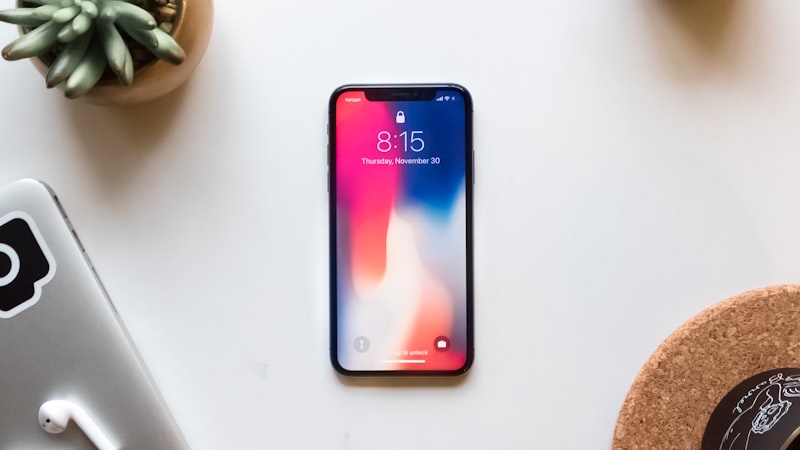
In 2026, with camera technology perhaps approaching a point of diminishing returns for many users, it's worth re-evaluating the importance of audio when considering an upgrade. Are the incremental gains in camera performance truly worth the cost, or are the often-subtle but cumulative improvements in audio a more compelling reason to switch?
Evolution of iPhone Audio: A Quiet Revolution
The iPhone's audio capabilities have evolved significantly over the years. Early iPhones offered basic monaural sound, gradually progressing to stereo speakers and improved microphone arrays. More recent models boast features like:
- Spatial Audio: Creating a more immersive and realistic listening experience, particularly with compatible headphones and content.
- Improved Dynamic Range: Allowing for clearer and more nuanced sound reproduction.
- Enhanced Noise Cancellation: Crucial for clear phone calls and voice recordings in noisy environments.
- Higher Quality Microphones: Enabling better audio capture for videos, voice memos, and virtual assistant interactions.
These advancements, while not always as visually striking as camera improvements, contribute significantly to the overall user experience. Consider the impact of clearer phone calls, more immersive music playback, or higher-quality audio recordings for personal and professional use.
Real-World Benefits: Beyond Entertainment
The benefits of improved iPhone audio extend beyond entertainment. Consider these scenarios:
- Professionals: Clear audio recording is essential for interviews, meetings, and creating content. Improved noise cancellation ensures clarity even in challenging environments.
- Students: High-quality audio playback enhances online learning experiences and allows for better focus during study sessions.
- Accessibility: Enhanced audio features can significantly improve the experience for users with hearing impairments. Features like Live Listen and improved speech recognition rely on high-quality audio input.
- Everyday Communication: Clear phone calls and video chats are crucial for maintaining personal and professional relationships. Improved noise cancellation reduces distractions and ensures clear communication.
Assessing Your Audio Needs: Is It Time to Upgrade?
When considering an iPhone upgrade, take a moment to assess your audio needs. Ask yourself the following questions:
- How often do I use my iPhone for phone calls or video chats?
- Do I listen to music or podcasts frequently on my iPhone?
- Do I record audio or video using my iPhone for personal or professional use?
- Do I value immersive audio experiences, such as spatial audio?
If you answered yes to several of these questions, then the audio improvements in newer iPhone models may be a compelling reason to upgrade, even if the camera advancements seem incremental. Compare the audio specifications and features of your current iPhone with those of newer models to determine if the upgrade is worthwhile.
The Bottom Line: Don't Overlook the Audio
While the camera understandably receives the lion's share of attention, it's crucial to remember that audio plays a vital role in the overall iPhone experience. As we explored in our analysis of display technology at iPhone View (https://iphoneview.com), even seemingly small improvements can have a significant impact on usability. Don't let the allure of megapixels overshadow the often-underestimated benefits of enhanced audio quality. Consider your specific needs and prioritize the features that truly matter to you. In many cases, the subtle but cumulative improvements in audio may be a more compelling reason to upgrade than you initially thought.
Questions readers ask
What does audio upgrades 2026 actually cost — in price, weight, or battery?
Expect a premium of roughly $200–300 over the standard model, plus a small weight penalty. Battery life is the bigger variable — early prototypes typically trade an hour or two of screen-on time for the new capability, then claw it back over a generation.
How does audio upgrades 2026 change the upgrade calculus for existing owners?
Existing owners weigh audio upgrades 2026 against the upgrade they were already planning. If the feature is meaningful for daily use, it pulls forward upgrades by about a year; if it is novelty, it shifts nothing.
Does audio upgrades 2026 require new developer APIs, or can existing apps adapt?
Apple historically ships a quiet developer API the year before the hardware lands, so existing apps that follow human-interface guidelines should adapt with modest work. Apps that hard-code layouts will need updates.
What would convince a sceptical reviewer that audio upgrades 2026 is worth it?
Hands-on time is the only honest test. A reviewer's first hour with the device tells them whether audio upgrades 2026 is solving a real problem they had, or a feature looking for a use case. The reviews following launch will be the verdict.
In short — what's the takeaway on more from iphone evolve?
It comes back to whether Apple can ship audio upgrades 2026 without compromising the parts of the iPhone people already pay for. The detail in this section is where that case is made or broken.