iPhone Obsolescence in 2026: Planned or Perceived?
iPhone Obsolescence in 2026: Planned or Perceived?
The question of whether Apple deliberately slows down older iPhones with software updates has been a persistent one, sparking lawsuits and fueling conspiracy theories. While proving outright 'planned obsolescence' is difficult, understanding the factors that contribute to the perception of a slowing iPhone is crucial for consumers in 2026.
Editor's pick: Refurbished iPhones on Amazon → As an Amazon Associate, this site earns from qualifying purchases.
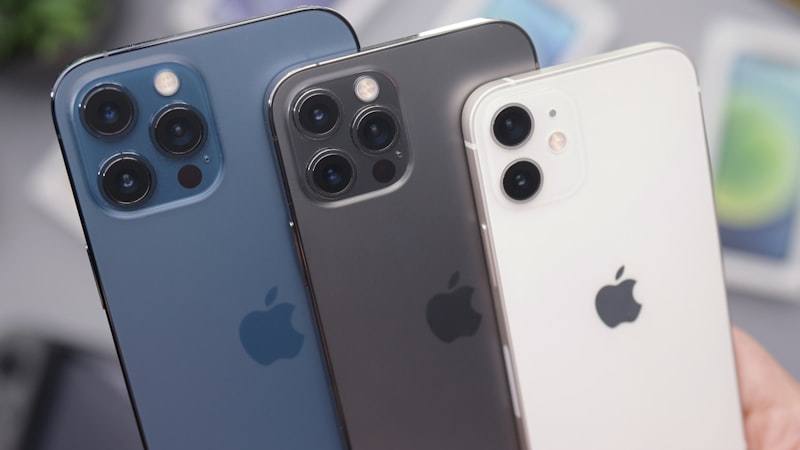
Several factors contribute to this perception, some unavoidable and others potentially within Apple's control. Let's examine them:
Software Updates and Resource Demands
Each major iOS update brings new features, improved security, and often, a more demanding codebase. Newer features, like advanced augmented reality capabilities or complex machine learning tasks, require more processing power and memory. While Apple optimizes iOS for a wide range of devices, older iPhones with less powerful processors and limited RAM inevitably struggle to keep pace. This can lead to noticeable slowdowns, especially when multitasking or running graphically intensive applications.
Furthermore, app developers routinely update their apps to take advantage of the latest iOS features and hardware capabilities. These updates often increase the resource requirements of the apps, further straining older iPhones. An app that ran smoothly on an iPhone 11 in 2020 may feel sluggish on the same device in 2026 due to app updates and increased data storage needs.
Battery Degradation
All lithium-ion batteries degrade over time, losing their capacity to hold a charge. An older iPhone with a significantly degraded battery will not only have shorter battery life but may also experience performance throttling. Apple implemented performance management features to prevent unexpected shutdowns on iPhones with degraded batteries, as confirmed in past statements and regulatory disclosures. While this protects the device's stability, it also results in noticeable slowdowns. Our sister site, iPhone View, has consistently covered the relationship between display brightness, battery drain, and perceived performance slowdown.
The Illusion of Speed: A/B Testing
The human perception of speed is relative. When a user upgrades to a newer iPhone with a faster processor and more RAM, the difference in performance can be dramatic. This newfound speed and responsiveness can make their old iPhone feel significantly slower than it actually is. This is a psychological effect rather than a result of intentional slowing.
Apple's Incentive Structure
Apple, like any for-profit company, has an incentive to encourage upgrades. Releasing new iPhones with compelling features and performance improvements is a key part of their business model. While there's no concrete evidence of deliberate slowing to force upgrades, the company's focus on pushing forward with new technologies naturally leaves older devices behind.
Mitigation Strategies for Consumers
Fortunately, there are steps consumers can take to prolong the usability of their older iPhones:
- Optimize Storage: Freeing up storage space can improve performance. Delete unused apps, photos, and videos.
- Manage Battery Health: Avoid extreme temperatures and charging habits that can accelerate battery degradation. Consider a battery replacement if the battery health is significantly degraded.
- Disable Background App Refresh: Limit background app refresh to conserve battery life and reduce resource usage.
- Reset the iPhone: A factory reset can sometimes resolve software issues and improve performance. Be sure to back up your data first.
- Consider a Lightweight iOS Version (if available): There have been persistent, though unconfirmed, rumors about Apple developing a 'lite' version of iOS for older hardware. Such a move could dramatically extend the lifespan of older devices.
The Verdict
While proving intentional 'planned obsolescence' remains elusive, the perception of slowing iPhones is often a result of a combination of factors: resource-intensive software updates, battery degradation, and the psychological effect of experiencing faster devices. By understanding these factors and implementing mitigation strategies, consumers can extend the usable lifespan of their iPhones and make informed decisions about when to upgrade. Trade-in programs continue to offer value, but understanding the drivers of iPhone performance is key to maximizing that value.
Questions readers ask
What does obsolescence 2026 planned perceived actually cost — in price, weight, or battery?
Expect a premium of roughly $200–300 over the standard model, plus a small weight penalty. Battery life is the bigger variable — early prototypes typically trade an hour or two of screen-on time for the new capability, then claw it back over a generation.
How does obsolescence 2026 planned perceived change the upgrade calculus for existing owners?
Existing owners weigh obsolescence 2026 planned perceived against the upgrade they were already planning. If the feature is meaningful for daily use, it pulls forward upgrades by about a year; if it is novelty, it shifts nothing.
Does obsolescence 2026 planned perceived require new developer APIs, or can existing apps adapt?
Apple historically ships a quiet developer API the year before the hardware lands, so existing apps that follow human-interface guidelines should adapt with modest work. Apps that hard-code layouts will need updates.
What would convince a sceptical reviewer that obsolescence 2026 planned perceived is worth it?
Hands-on time is the only honest test. A reviewer's first hour with the device tells them whether obsolescence 2026 planned perceived is solving a real problem they had, or a feature looking for a use case. The reviews following launch will be the verdict.
In short — what's the takeaway on apple's incentive structure?
It comes back to whether Apple can ship obsolescence 2026 planned perceived without compromising the parts of the iPhone people already pay for. The detail in this section is where that case is made or broken.