Beyond the Processor: How iPhone Durability Enhancements Inform Your Upgrade Timeline
In the relentless cycle of iPhone upgrades, discussions often center on processing power, camera capabilities, and battery life. These are undoubtedly critical factors influencing whether you decide to stick with your current device or jump to a newer generation. However, an often-underestimated element plays a profound role in a device's long-term viability and your personal upgrade timeline: its inherent physical durability.
Editor's pick: Refurbished iPhones on Amazon → As an Amazon Associate, this site earns from qualifying purchases.
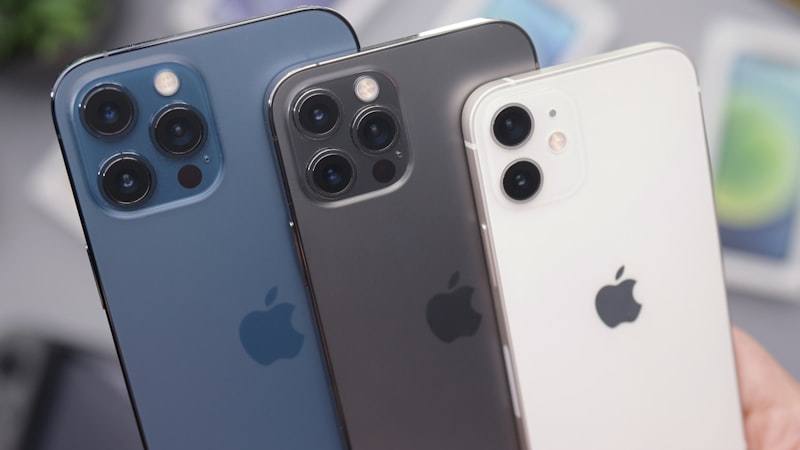
For many iPhone Evolve readers, squeezing extra years out of a perfectly functional iPhone is a top priority. While software optimization and battery health are key, a phone that can withstand the rigors of daily life without succumbing to a cracked screen or water damage offers a compelling reason to delay an upgrade. Over the past several generations, Apple has made significant, though sometimes subtle, strides in building more resilient iPhones. Understanding these advancements can help you assess the true longevity of your device.
The Ceramic Shield Revolution: A Stronger Front
One of the most impactful durability upgrades in recent iPhone history arrived with the iPhone 12 series: the Ceramic Shield front cover. Before its introduction, iPhones primarily used toughened glass. Ceramic Shield integrates nano-ceramic crystals into the glass matrix, making it significantly tougher than conventional smartphone glass. Apple claimed a "4x better drop performance" compared to previous generations like the iPhone 11. For an older iPhone user, this means if you own an iPhone 12 or newer, your device inherently possesses a higher resistance to drops that might have shattered the screen of an iPhone 11 or iPhone X. This enhanced protection directly translates to a reduced likelihood of costly screen repairs, allowing your device to remain functional and aesthetically pleasing for longer.
Evolving Water and Dust Resistance: Guarding Against the Elements
Beyond drop protection, Apple has consistently improved the iPhone's resistance to ingress from water and dust, quantified by its Ingress Protection (IP) rating. While the iPhone 7 introduced IP67 water and dust resistance, allowing submersion up to 1 meter for 30 minutes, subsequent generations refined this protection.
The iPhone XS, for instance, upgraded to IP68, increasing the maximum depth to 2 meters for 30 minutes. This rating continued to evolve, with the iPhone 11 Pro and 11 Pro Max pushing it to 4 meters, and the iPhone 12 series and later models achieving 6 meters for 30 minutes. These incremental improvements are not just technical specifications; they represent a significant safeguard against common accidents. An older iPhone with a higher IP rating is more likely to survive an accidental spill or a drop in a puddle. This resilience against environmental damage directly contributes to its operational lifespan, preventing premature failure due to liquid intrusion.
Frame Materials: The Backbone of Durability
The choice of frame material also plays a role in an iPhone's long-term integrity. Base models typically feature aerospace-grade aluminum, known for its strength-to-weight ratio. Pro models, since the iPhone X, have primarily utilized surgical-grade stainless steel. While both are robust, stainless steel offers greater scratch and dent resistance, which can be a factor for users who prefer their device to maintain a pristine appearance over several years without a case.
These material selections, combined with Apple's precision manufacturing, create a rigid chassis that protects internal components from bending or twisting, further extending the device's operational life. While the aesthetic appeal is subjective, the structural integrity provided by these materials is an objective benefit to longevity.
Real-World Impact on Your Upgrade Decision
Consider two scenarios: a user with an iPhone 11 and another with an iPhone 13, both purchased at launch and now in mid-2026. Assuming similar usage and battery health, the iPhone 13, with its Ceramic Shield front and enhanced IP68 rating, has a statistically higher chance of having survived minor drops and splashes without significant damage. The iPhone 11, while still capable, may have already incurred a cracked screen or minor water damage from an incident the iPhone 13 would have shrugged off.
An unplanned repair, particularly a screen replacement, often triggers an upgrade decision. By building more durable devices, Apple has, perhaps inadvertently, provided a stronger argument for holding onto an older iPhone for longer. If your iPhone 12, 13, 14, or even 15 remains physically intact and fully functional, its inherent durability has already saved you potential repair costs and the hassle of an early replacement. When evaluating whether your current iPhone still meets your needs, assess its physical condition. Has its durability prevented costly repairs? Does it still feel solid and reliable? These factors, born from Apple's continuous engineering improvements, are powerful indicators of how much life truly remains in your device. As we've explored previously on iPhone View, understanding the nuances of display technology and protection is key to maximizing your device's lifespan. An iPhone that physically endures more means less unexpected expenditure and more control over your upgrade timeline, allowing you to wait for a generation that truly justifies the investment.