Every September, Apple unveils a new iPhone lineup, and every September, millions of people ask themselves the same question: is this the year I upgrade? For a long time, the answer was an easy yes. Early iPhones delivered transformative year-over-year leaps in display quality, camera capability, and processing power. But as the smartphone market has matured, the calculus has changed. The gap between consecutive iPhone generations has narrowed considerably, and the financial case for annual upgrades has become harder to justify for most people.
Editor's pick: Refurbished iPhones on Amazon → As an Amazon Associate, this site earns from qualifying purchases.
We dug into the performance benchmarks, camera sensor specifications, battery capacity figures, trade-in pricing data, and iOS support timelines across every iPhone generation to determine what the numbers actually say about upgrade timing.
Photo: Unsplash
The Diminishing Returns of Annual Upgrades
Between the iPhone 6 and iPhone X era, each new A-series chip delivered roughly 30 to 40 percent gains in CPU performance year over year. Those improvements were perceptible in daily use. Apps loaded faster, multitasking got smoother, and graphics-intensive games became viable on mobile hardware for the first time.
Starting around 2020 with the A14 Bionic, that curve began to flatten. Recent A-series chips still post gains in synthetic benchmarks, but the real-world difference between, say, an A17 Pro and an A18 Pro is marginal for the tasks most people perform: messaging, browsing, streaming, and photography. The same pattern holds for cameras. Computational photography improvements from iOS software updates now deliver more visible quality gains than the incremental sensor hardware changes between consecutive models.
Battery life tells a similar story. Apple has steadily increased cell capacity and improved power management, but the jump from one generation to the next typically adds 15 to 30 minutes of additional screen-on time rather than the multi-hour leaps that once separated models.
The Two-to-Three-Year Sweet Spot
When you compare iPhones separated by two or three generations, the improvements become genuinely meaningful. Upgrading from an iPhone 14 Pro to an iPhone 17 Pro, for example, spans two major chip architectures, a significant camera system overhaul, and a battery life improvement that is immediately noticeable. That kind of gap also tends to coincide with design changes, new display technology, or the introduction of entirely new hardware features like the Action Button or the Camera Control.
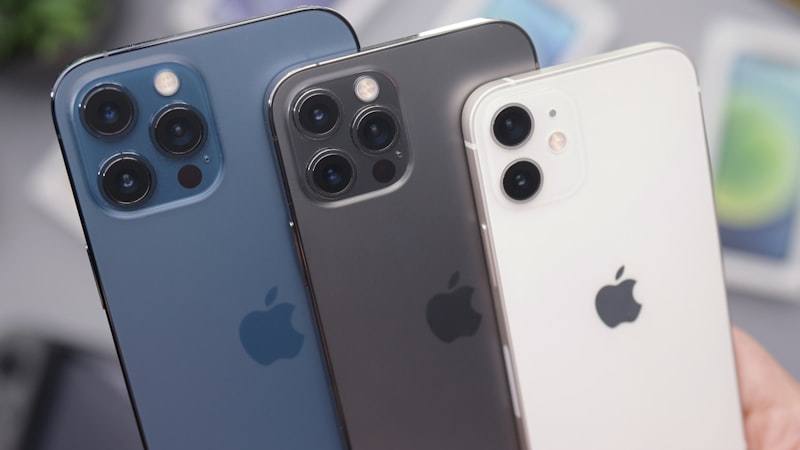
Knowing when to upgrade saves money and maximises value
A two-to-three-year cycle also aligns well with the practical lifespan of lithium-ion batteries. After roughly 500 to 800 full charge cycles, battery maximum capacity typically drops below 80 percent. For most users, that threshold arrives somewhere between the second and third year of ownership, making it a natural point at which the phone starts to feel noticeably less capable.
Trade-In Timing and Depreciation
Trade-in values follow a predictable depreciation curve, and understanding it can save you hundreds of dollars over time. iPhones lose roughly 30 to 40 percent of their value in the first year after release. By the end of year two, that figure climbs to around 50 to 60 percent. After three years, most models retain only 25 to 35 percent of their original price.
The steepest single drop in trade-in value occurs in the weeks immediately following the announcement of a new model. If you plan to trade in, doing so before or during the first week of the new launch cycle consistently yields the highest return. Waiting even a month after the new model ships can cost you 10 to 15 percent of your trade-in value.
For someone on a two-year cycle, trading in promptly at upgrade time means you effectively pay around 50 to 55 percent of the retail price for two years of use. Stretch that to three years and you pay roughly 65 to 75 percent, but you skip an entire purchase cycle, which usually results in lower total cost of ownership over a five-year window.
Recommended from our network
Software Support Changes the Equation
One of the strongest arguments against frequent upgrades is Apple's extended software support policy. iOS 19, expected later this year, is widely anticipated to support devices as far back as the iPhone 12 from 2020. That represents six years of major software updates, and security patches typically continue for at least one additional year beyond the final major release.
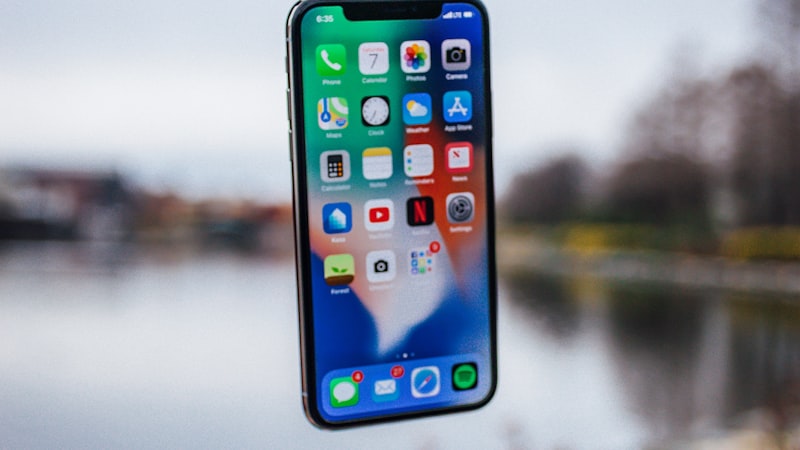
Year-over-year improvements have become more incremental — but more refined
This longevity means that a three-year-old iPhone is not a compromised device. It still receives the latest features, security fixes, and app compatibility. The practical usability floor has shifted dramatically. Where an iPhone once started to feel obsolete after two years due to software abandonment, today's models remain fully functional for significantly longer.
The Foldable Variable
One factor that could disrupt the current upgrade calculus is the anticipated arrival of a foldable iPhone. Industry analysts and supply chain reports have pointed toward a potential launch in the 2026 or 2027 timeframe. A foldable device would represent the kind of form factor shift that has not occurred since the iPhone X eliminated the home button in 2017. If Apple enters this category, it could create a compelling reason for even disciplined upgraders to break their cycle, much like the transition from Touch ID to Face ID prompted widespread adoption regardless of device age.
A Practical Framework for Your Decision
Knowing when to upgrade saves money and maximises value
Rather than defaulting to an annual upgrade or holding out until your phone physically fails, consider evaluating these four factors when a new iPhone launches:
- Battery health. If your maximum capacity is below 80 percent and you regularly need to charge before the end of the day, the battery alone may justify an upgrade or at minimum a battery replacement.
- Feature gap. Count the number of hardware features introduced since your current model. If three or more matter to your daily use, such as an always-on display, Dynamic Island, USB-C, or a new camera system, the cumulative improvement is likely worth the cost.
- Trade-in window. Check your current device's trade-in value before and after the new launch. If you are in the two-to-three-year range, trading in during launch week maximizes your return.
- Software horizon. If your device is approaching the end of its iOS support window (typically six to seven years from release), upgrading ensures you remain on a supported platform with active security updates.
For the majority of users, the data supports a clear conclusion: annual iPhone upgrades are a poor value proposition in 2026. A two-to-three-year cycle captures the most meaningful improvements, aligns with natural battery degradation, and delivers the best balance between cost and capability. The only exception is if a genuinely new form factor, like a foldable, arrives and resets the upgrade conversation entirely. Until then, patience is the most financially sound strategy.