Beyond Silicon: The iPhone's Next Great Leap Hinges on Connectivity
Beyond Silicon: The iPhone's Next Great Leap Hinges on Connectivity
For years, the narrative surrounding iPhone upgrades has been dominated by processor advancements. Each new generation boasts a faster, more efficient chip, promising smoother performance and enhanced capabilities. However, as we approach 2026, the incremental gains in silicon performance are diminishing, and a new bottleneck is emerging: connectivity.
Editor's pick: Refurbished iPhones on Amazon → As an Amazon Associate, this site earns from qualifying purchases.
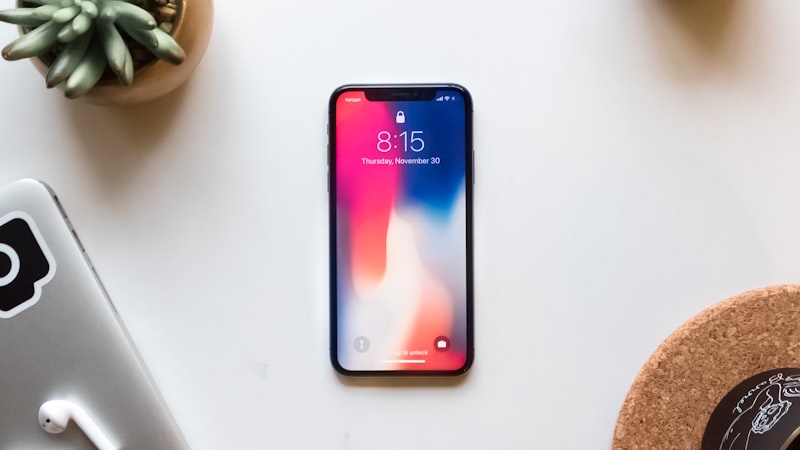
While the A-series chips remain crucial, the iPhone's future innovation hinges increasingly on its ability to seamlessly connect to the world. This encompasses everything from cellular data and Wi-Fi to emerging technologies like satellite connectivity and ultra-wideband (UWB).
The Cellular Stagnation
5G adoption, while widespread, has yet to deliver on its initial promises of truly transformative speeds and latency. Network congestion, limited infrastructure, and the inherent limitations of current 5G technology are hindering its potential. Furthermore, the development and deployment of true 6G networks are still years away, leaving a gap in the cellular landscape. This stagnation forces Apple to explore alternative solutions to enhance connectivity and provide a more reliable and faster user experience.
Wi-Fi 7 and Beyond
Wi-Fi 7 offers significant improvements over its predecessors, delivering faster speeds, lower latency, and increased capacity. However, its widespread adoption is dependent on the availability of compatible routers and infrastructure. Apple's integration of Wi-Fi 7 into recent iPhone models is a step in the right direction, but the full potential of this technology will only be realized as more networks upgrade to support it.
Satellite Connectivity: A Lifeline, Not a Revolution (Yet)
The introduction of satellite connectivity for emergency SOS has been a welcome addition, providing a crucial lifeline in areas with no cellular coverage. However, the current implementation is limited to text-based communication and specific emergency situations. Expanding satellite capabilities to support broader data transfer and communication services would require significant technological advancements and infrastructure investments. While the potential is there, widespread satellite internet access on iPhones remains a distant prospect. It is another band-aid solution.
Ultra-Wideband's Untapped Potential
Ultra-wideband (UWB) technology, already present in iPhones since the iPhone 11, offers precise location tracking and secure communication capabilities. While currently used for AirDrop, AirTags, and car key functionality, UWB has the potential to unlock a range of new applications. Imagine augmented reality experiences that are seamlessly integrated with the physical world, or secure payment systems that rely on precise location verification. As we explored in our analysis of display technology at iPhone View (https://iphoneview.com), the tight integration of hardware and software is vital to AR/VR success; that same principle applies to UWB. Apple must continue to develop and expand the UWB ecosystem to unlock its full potential.
The Software-Defined Future
The future of iPhone connectivity is not solely dependent on hardware advancements. Software plays a crucial role in optimizing network performance, managing bandwidth, and ensuring a seamless user experience. Apple's ability to intelligently switch between cellular, Wi-Fi, and satellite networks, depending on availability and signal strength, will be critical. Furthermore, advancements in network protocols and data compression algorithms can significantly improve data transfer speeds and reduce latency.
The Upgrade Incentive
So, will connectivity be the driving force behind future iPhone upgrades? The answer is likely yes, but not in isolation. While incremental improvements in processor performance may no longer be a compelling reason to upgrade, significant advancements in connectivity, coupled with other features and improvements, could sway consumers. Imagine an iPhone that can seamlessly connect to any network, providing a consistently fast and reliable internet experience, regardless of location. That is a compelling vision for the future of the iPhone, and one that Apple is actively working towards.
Ultimately, the iPhone's next great leap will not be solely defined by the speed of its processor, but by its ability to connect to the world around it. By focusing on advancements in cellular, Wi-Fi, satellite, and UWB technologies, Apple can unlock a new era of innovation and deliver a truly transformative user experience. As our sister site, iPhone Arc (iphonearc.com) has shown, the external design is only part of the equation; what's *inside* is what truly matters.